longitudinal leadership. [pt. 2]

For a period of time in middle school, I wore a forest green woven bracelet that read, “GO THE DISTANCE” in white stitching. They were handed out at a Christian sports camp I attended summers before. When it came to sports, I preferred being a spectator. Attending camp challenged me to try something new. Over several summers, I learned that I preferred individual sports like tennis and cross-country to team sports, like soccer. I never considered myself much of an athlete, but the bracelet gave me a small sense of belief that I had it in me.

I’ve turned those three words, “Go the distance,” over in my mind countless times since then. They lift me when I want to give up. They apply to weary seasons I find myself in, to finish strong. They remind me that life is a series of decisions. And all my decisions write the stories that make up my life.

Leadership is a long game. It’s navigating through circumstances with people. And it’s a series of decisions. Decisions that tell a story about what we value. Decisions that affect the future. Decisions that either unify our words with our actions, or divide them.

Some day, people will tell stories about my leadership. My kids will tell stories about my parenting. My co-workers will share what it was like to be on the other side of me in meetings. My resumé will have two dates between a dash. I can only guess at the stories they’ll tell, but I hope they say I was the type of leader who could go the distance.

I hope people will sense that I applied myself to every situation. That I gave my best and that I saw the best. Especially when I was tired and overspent. I hope they say I was a leader who lasted. Who weathered storms. Who built character during high tide and kept others from coasting during low tide.

I’ve got miles to go. And in this chapter, I’m trying to walk alongside experienced leaders who have something to teach me. So here is what has been illuminated for me lately.

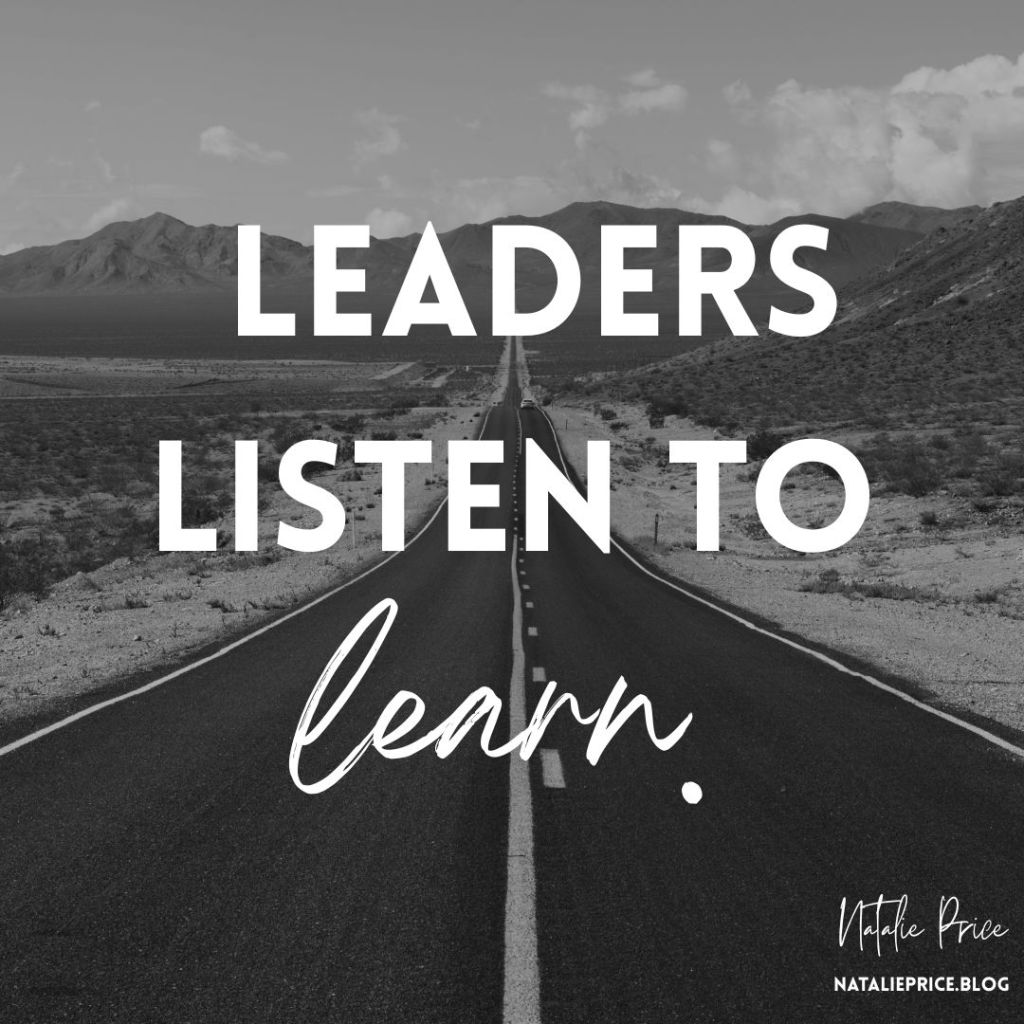
2) Leaders listen to learn.

One of the benefits of working remotely is that I’ve been forced to pay closer attention to the nonverbal aspects of communication. Tone can hint at someone’s mood. Pitch can reveal stress. Pauses between speaking can signal thoughtfulness, confusion, or ideation. Nonverbals may suggest things to me, but asking questions helps me find out if they’re accurate. Sometimes I’m wrong, and read into things. But more often than not, people reveal themselves through what they don’t say out loud.

If there’s any skill I hope to develop deeper over my lifetime, it’s listening. I think I will always be a student in that sense. I’m discovering the wisest leaders share this sentiment. I’ve been on the other end of the line many times to know when someone is distracted or when someone is really interested. I’ve answered work FaceTime calls and have legitmately watched a person swipe mascara on their eyes, using the camera as their mirror. Not being listened to, feels a certain way. And I too, have been an inattentive listener many times.

I’ve cared more about what I want to say next. I’ve readied my comebacks, thought about what I’m making for dinner, texted someone else, all while acting like I’m listening. But what I’m learning is, 1) people can always tell if you care about what they’re saying and 2) leaders are motivated to listen because they believe there’s always something to learn.

Seasoned leaders often talk about who they were in the first half of their leadership compared to wiser versions of themselves in their second halves. When I listen to their stories, a common theme throughout is that they realized there was more power in listening than there was in having the last word.

I’m long winded. I can talk in circles and rack up minutes doing it. But when I get really intentional, and posture thoughtful questions towards others, my days get really exciting. In listening to one leader talk about their struggle to get organized, I realized I had heard another leader share the same difficulty. Dots connected as I listened. A solution became clear. We implemented it the same day. The tiniest of weights lifted for all of us. And we got to move forward a little lighter.

Other times when I’ve practiced listening, solutions don’t come dancing to the foreground like we hope. Sometimes, no matter their effort, life is still challenging. In those moments, relatability is all I can offer. “I’ve been there, too. It’s hard.” helps people alleviate more leadership pain than I ever thought. Leaders often come back later and say, “Thank you for making me feel like I’m not crazy.”

Reflecting on my growth over the past year, I still battle my insecurity. A lot of that is worrying that I’m the only one who feels a certain way. Listening so I can learn from someone else has shown me, I’m not crazy either. What I thought would erode my credibility with leaders, has been the very thing that connects us.

If a leader can listen with the intent to learn, they’ll always learn. That’s the gift of having agency. I am learning that leaders find solutions for themselves faster when you give them permission to name reality first. “You’re not crazy. That’s valid.” has been the most helpful thing I can say. It’s been an onramp to building trust.

Listening to learn builds trust. Trust builds secure leaders. Confident leaders are solution-oriented. Solution-oriented leaders go the distance.

The world needs stronger leaders and better listeners. Why not be both?

longitudinal leadership. [pt. 1]

The first time I was called a quitter was by my brother in elementary school. We were playing the board game Sequence, and I had played enough to know I was dead in the water. So I quit. I got up from lying on my stomach, hands holding up my face. I threw my cards down where my elbows had indented the carpet, swiped at the game pieces, and started the short walk to my room. I was invigorated by the feeling of control I had. My brother couldn’t tell me I lost if I never finished.

“You can’t quit! Quitter!” he called after me. Something jolted inside of me. I thought quitting would be fulfilling. Instead, being labeled a quitter affected me. It wasn’t the last time I left him hanging in the middle of a game. It wasn’t the last time I gave up on something. After that day, it actually became easier to throw in the towel. I quit piano lessons, Girl Scouts, and using manners in my tomboy phase, to name a few. But it did leave a core memory. I never wanted to be called a quitter. It upheaved something in me I did not like and had to face. So I started to learn how to be someone who sees things through.

In the twenty-five years since that day in the family room, I’ve kept learning about life and leadership. I’ve become a mother and am still figuring out how to raise strong-willed miniature versions of myself while keeping multiple plates spinning. Over seventeen years, I’ve held two jobs in two states and have worked with a variety of people. In the last ten years, especially, I have had opportunities to lead both in operations and remotely. I’ve followed several leaders, and I’ve been in positions to coach younger leaders. Each has come with changes and challenges.

There is not anything new about leadership I’ve learned; it’s just been new to me. There is nothing I could offer that hasn’t been shared before by stronger leaders, said in a nuanced way or from a different perspective. Leadership can be both relationally complex and strategically simple. Every experience has taught me something valuable, and if I were to write each one down, I believe I could fill a small library of my own fascinations, lessons, and takeaways.

But collectively, three things have been surfacing for me about being a leader. Each idea has formed longitudinally over time. Because the truth is, there have been a lot of times over the last decade I’ve wanted to quit. I’ve wanted to quit my job. Quit relationships. Quit the field I’m in. Quit trying so hard. Quit leadership. Every time I’ve resolved to abandon the situation I find myself in, I can hear the 9-year-old version of my brother say, “But you can’t quit!”

And it stops me in the hallway of my heart again. So I keep learning.

1) A leader’s first job is to know themselves.

My favorite people to work with are the people who say that they are not self-aware, but would like to get better at knowing who they really are. Those people are unicorns and also, ironically, the most self-aware. It’s not as common to meet someone who can be that honest with themselves. I like that they know where their starting point is. I’ve been the person who has prided myself on how well I know who I am, but then am the first person to be blindsided by peer reviews and feedback.

Knowing yourself matters if you’re going to lead. From leading adults to toddlers, this has a tremendous impact. The key to business or building stability within a home is consistency. Whether it’s consistent sales growth or consistent bedtimes, stability stems from cohesive decision-making. A person who does not know themselves inevitably wrestles with inconsistency in their life. They are the first people to pick pleasing others over sharing their honest thoughts. They actually don’t have a choice in the matter. Because sharing honest thoughts requires them to know exactly what they think and why. Merging with what someone else thinks takes no effort and never has to answer the “why” question.

The “why” question helps inform what a leader’s motivation is. Any mom can answer her child with, “Because I said so. That’s why!” And no kid has ever been satisfied with that. Because it’s passive. It’s the same in leadership. A leader who can make a decision and give solid reasoning for it wins with people far more than those who can’t explain themselves clearly. People can at least disagree and live with grounded rationale more than they can accept a vague cop-out.

Knowing yourself requires that you spend time with yourself. It takes intentional energy in a world of autopilot, automatic, and AI-generated responses. Many people aren’t comfortable being alone with their own thoughts and slowly drift from becoming who they could be.

Leaders can absorb a lot of information about their industry or even about leadership, and still miss finding out what they were created for and who they were designed to be. To know yourself is to know the creativity and immeasurable love of God. It’s not pointless; it’s the entire purpose of life. Knowing yourself and knowing things about yourself doesn’t mean agreeing with yourself. I know I interrupt people when they’re speaking regularly. Not okay. I know I am insecure when people do not accept my ideas. And I desperately want to get better at that, too.

Knowing yourself helps you see areas for refinement so that you can ask for help. Asking yourself questions about what you think, what you feel, and what you believe shows you a realistic map of your growth. It helps you see the good work God is doing in your life. It can also reveal how much you’re operating out of your own pride and human limitations. It shows how much or how little you rely on the Lord for insight in your daily interactions.

It also positions you in a greater place to understand the people you lead. None of us has arrived. We all need help. Where would I be if I didn’t learn from leaders who went before me? Who learned the hard way? Who paved a path for people like me to take what they learned and keep going?

I worked for a leader for five years who put in great effort to know himself well. He was sincere, clear, quick to catch and apologize for his shortcomings, interested in others, and curious about what he did not yet know. I haven’t worked for him in several years, but I’ve never forgotten how valuable he made me feel to his organization. I still recall hanging up the phone countless times and feeling lifted by our conversation and the questions he asked me. He has produced more leaders from his company than corporate knows what to do with, and it’s no coincidence.

I had so many spiritual leaders early on who taught me that self-awareness is actually the gift of the Holy Spirit. When we accept Jesus as Lord and Savior of our lives, he gives us a helper. The Holy Spirit. Who guides us, who talks to us across the ticker of our minds, as my dad says, and shows us a better way to live. I watched them model humility to me when they didn’t get things right. They could name why they did what they did. They could admit the self-serving motivation, the why. They could ask for forgiveness without shame because their ultimate source of supply came from the finished work of the cross. They won me over to Jesus Christ with how they led themselves. And it was rooted in knowing their God-designed, purpose-intended selves first.

People can always tell if a person knows themself or not. Leaders, especially parents, who try to hide their shortcomings, erode their credibility without realizing it. It costs them their influence. But a leader who is in the process of finding out who they are is much more compelling. Their story is relatable because that’s what we all want. To be secure, consistent, confident leaders who can face our imperfections and keep learning.

I’ve been trying to ask myself more often why I do the things I do. I’ve been driving in silence more often, forcing myself to reflect on how I treated people or the reactionary things I said that day. I’ve been asking the Lord to refine the things in me that aren’t helpful to the people I lead, especially my kids. I’m still in process, and I’m not always consistent. But being in process means I at least have momentum.

The leader who knows themself first can model what a self-aware life looks like for others. Consistency can then compound. Self-aware leaders build trust, provide stability, increase creativity, and build a healthy infrastructure that can sustain uncertainty, say “yes!” to opportunity, and encourage human flourishing.

What have you been learning about yourself?
What has God been showing you about yourself lately?

unhurried.

December has a way of evoking deep emotions. I feel things differently in December than in other months. Maybe it’s because I was born on a Friday afternoon the last week of December, and turning a year older makes me pensive now. Perhaps it’s the expectation of Christmas. As a parent, there’s so much I want my kids to experience and remember about the Advent season. As I’ve been putting my kids to bed each night, though, I realize my intentions have outpaced my energy for the day. Guilt comes easily for not taking them to see the lights like we planned. Anxiety comes from waiting last minute to read our Christmas story excerpt for the day.

So much of my worry can come down to wanting more time. More hours in the day. More space to catch my breath before going onto the next item on my to-do list. I want more time with my kids when my energy is high, and I disappoint myself when I’m distracted and fragmented. It happens often, as I try to juggle house chores with work calls and deadlines. When my kids come home from school, I’m answering a flurry of questions and breaking up arguments. I become rash and untempered. I’m overwhelmed by a strong sense of urgency to eliminate chaos. And when I can’t, or I lack grace in my efforts, I sigh heavily. My shoulders sag.

I’m trying to not have saggy shoulders. Literally, because my mom has always thought it’s unbecoming of me, and metaphorically, because this season is a gift. Celebrating Christmas is full of opportunity and hope for what’s to come. I don’t want to waste it, or rush it, or miss the point of it. I wish life were like a Hallmark movie, though, where everything is serendipitous and nothing is realistic. Perfectly manicured characters can transform from Ebenezer Scrooge to Buddy the Elf in 90 minutes just by decorating sugar cookies and saving a small business in the St. Nick of time.

Instead, life for me is simply a series of choices. How do I want to manage my time? How do I want to respond to unpredictable outcomes? At the end of each day, did I reflect on the miracle of Jesus coming to earth as a baby? Or will I be too worried about how the post office lost my package that was supposed to arrive two weeks ago? Will I get flustered by my kids’ complaints? What perspective will I choose to have about work decisions I didn’t make?

I’ve spent time auditing my life and identifying symptoms, hoping they’d lead me to root causes. I’m hyper aware of how often the negative side effects of decision fatigue win, and I become hurried and reactive. I race against time when no one has asked me to. I become defensive, impatient, and take on a critically rude tone at home. So much of that can be traced back to needing Jesus, yes. But how I manage my time, especially what I give so much of my time to, is also a factor.

Next week, I’ll turn 33 against my will. I can’t turn back the aging process, but I did lay out in my journal what I hope for this coming year. What I want is actually less. Fewer things to manage. Less clutter to declutter again and again. Less self-induced stress, less time spent on my phone, fewer opportunities to waste time.

I can get so distracted shopping online for deals, which turns into buying things we don’t need or won’t need for a long time. Before I make the argument that stocking up on things is actually wisdom at play, let me just say: I sense the Lord challenging me to rely on him for my needs a little more this coming year than my ability to live like the apocalypse may come knocking tomorrow.

I exhaust myself managing all the things I own. I have eight billion cords, but I only know which ones I need for my computer, watch, and phone. The rest make for a tangled-up game of Russian roulette and trying not to act like Clark Griswold when I need to charge anything else. I have 15 book studies sitting on my shelf, when my preferred method for my entire adult life has been to read through the Bible using a yearly plan instead. Whenever I find a pair of pants I like, I buy four pairs the second they go on sale, just to be safe. Safe from what? Not sure. My grandmother was a child of the Great Depression, and I’ve used this to convince myself that my fear of lack is genetic. It’s not.

Checking email takes me forever because I have three accounts. One for junk, one for work, and one for personal. There are two people in life: those who like to see how big a notification number they can get on their inbox icon, and those of us who are more sane and want the email notifications cleared. Either way, I want less to manage. Because whenever I get overwhelmed, I drop everything, ignore everyone, and go organize closets and shelves. It’s cathartic, but it’s also a hamster wheel.

Fewer shoes to trip on, fewer books to display, and fewer distractions. More time with family, more time to focus, more to be grateful for, and more margin. Because when there’s more margin, I’m not in a hurry. More margin gives time for more meaning. I don’t mean to overspiritualize my age, but turning 33 makes me think about Jesus a lot. I think about how he gave himself margin. How he established rhythms. He ensured his time was never wasted. He was unhurried and yet always on time. Unhurried was a posture. It made him approachable. It helped him ask good questions, and it gave lost people the space to ask him questions. Jesus’s ministry was done in the margins of time.

I want to clear space to invite Jesus into the margins of my life. I want even the margins, the quiet corners, to have the opportunity for meaning. I want to exchange managing things for fostering fun. I don’t want my kids to have memories of me answering their questions while my eyes are on my phone. I don’t want them to remember the sounds of my hurried footsteps coming down the hall, scooping up dirty clothes in a huff. They’re five and seven, but before I know it, they won’t be. Less worrying about fleeting time. More savoring every moment.

Christmas is a funny time to arrive at my resolve for less, when there’s so much I want to take in. All the cringeworthy movies and local events. My shopping list for people isn’t finished. Gifts are still unwrapped. But it’s actually the perfect time to slow down and take in the real magic of the Christmas story.

The world thought they needed a powerful king to save them. What they needed was Emmanuel. A baby who in thirty years would grow in wisdom, stature, and favor in the eyes of men. He came quietly and without much. Yet he was everything, the hope of the world. We often don’t recognize the gift of what’s before us. It’s time that helps us appreciate what once was. There were probably plenty of people who missed Jesus then or miss the point of him now.

But Christmas reminds us that Jesus loved us so much that he came to earth to be with us. To reconcile us back to him for all of eternity. He was here for a short time, but the hope of Christmas is that Emmanuel, which means God with us, is the One who was, who is, and is to come. He is forever. My small brain can’t comprehend his version of time, but this I know: Jesus didn’t preach the Sermon on the Mount on 2x speed, and I’m a better version of myself when I’m not hurried by menial tasks.

So often I want things to be deep and the lessons I’m learning to be profound. The simplicity of slowing down this Christmas season isn’t flashy or impressive. I barely know what an unhurried posture actually looks like; I’ve lived on autopilot for so long. But I am practicing standing with my shoulders back.

Wherever you find yourself this Christmas, I pray you’ll be rich in the hope we have that a Savior has been born to us. A king! A redeemer. A friend. Who wants to meet you even in the margins of your life, too.

Take care & take heart,