Longitude measures both distance and time. Depending on your approximate distance to the equator, one degree of longitude is around 54.6 miles. The Earth rotates on its axis, and as we learned in school, it takes 24 hours to complete a 360-degree rotation. So if one degree of longitude is ~54.6 miles, one degree of longitude equates to around 4 minutes.
Leadership, less scientifically, can be measured by distance and time, too. I’ve been a leader in my current role for nearly ten years. Spanning the last decade, there were seasons when I led people poorly. There were seasons I shifted perspectives about people or processes I once held. I logged mileage with people through crucial conversations and regular feedback. The sum of my leadership so far is ten years plus the experiential distance I’ve walked with the people in my organization.
King Solomon wrote in Ecclesiastes that there is nothing new under the sun. There’s nothing inherently new about leadership. But what is most fascinating is that people can always learn leadership lessons that feel new to them. Cue distance and time. I was only a 23-year-old leader for one year. And so were you. In that year, I navigated life as a newlywed, in a new state, leading at a new company, in a new field. By the time I was a 24-year-old leader, I was an expectant mom who had worked through hours of conflict and scenarios needing solutions. I was not the same leader. I had grown. Longitude was at work in my life.
My dad often shares a variation of the phrase, “People need to be reminded more often than they need to be instructed or told.” I’ve found that to be true. I read the same book every January. And every January, I am impacted in fresh ways. Why? Because the time that has passed and the intentional distance I’ve traveled in my leadership have changed me. Old information can be received with new eyes.
This chapter of my leadership has tempted me to drift. It’s cost me a lot of time to process through what’s unclear and what I can control. Building leadership muscle requires endurance through challenges and takes time. And I’m tired. I’m really tired. I’ve let discouragement take me downstream. I’ve wrestled with tough decisions. I’ve stared at empty journal pages without a single idea of where to start.
As I share my final observation about leadership lately, I resolve to lead better at 33 than I did at 23. So I’ll keep looking to the lives of seasoned leaders, of resilient leaders, of humble leaders to teach me more. This is what they’re teaching me.
3) Leaders are lifters.
Last week, a leader shared a story with me I’ve thought about every day since. He serves as a leader in the middle of his organization, hungry to keep growing. Towards the end of our conversation, I had asked him, “What do you really need to hear as a leader right now?”
He shared that a year ago, he was riddled with doubts about his future. Until someone saw him, really saw him, and the small impacts he was having in his role, and told him so. He heard for the first time in a long time that he had what it took to be great. “Someone believing in me was all I needed,” he said. One person shared true words that lifted another person. And it changed the trajectory of his leadership and set him on a focused path to the future.
His answer to my question was that he needed to hear that he has what it takes to be a leader of his own company someday. He needed to be reminded again. Because leadership is long-term and it’s linear. We can’t microwave time or skip past processing painful things and expect to lead wholly.
I love his story because I can see myself in it so clearly. I need to be reminded to keep going. To dig deeper. To keep showing up. To have the courage to share the last ten percent of the truth, even if it costs me favor with people. I need to be reminded often that I have what it takes.
We kept talking about what the options are when you’re leading from a place of discouragement. And we decided there aren’t many. But one choice is to choose to elevate the people around you. To choose to be the infusion of positivity where there is none. To uplift someone.
Because leaders are lifters.
Lifters are people who encourage someone through words, their presence, their prayers, or their questions. David Brooks, in his book How to Know a Person, calls these people illuminators. They can lift a room with their spirit. They can speak power into people with their words.
If I were to measure my life by the number of lifters I have in my corner, I’m rich.
I learned that leaders are lifters from my dad. If this idea sounds original, I can take no credit. He sees people for who Jesus made them to be, and he never wastes an opportunity to tell people that. Throughout my whole life, when I walk with my dad, we always stop so he can tell someone he appreciates how great their yard looks and thanks them for the work they put into it. We pause to learn someone’s name. I’ve heard him tell his pharmacist in the middle of Sam’s Club that she does amazing work and she’s great with people, because it’s the truth.
He is the most authentic, naturally incisive person because he pays attention to the small details that make up a person’s life. And then chooses to tell them that what they see may as mundane is actually magnificent. He’s a lifter.
Rob and Lisa Burris light up every room. I became friends with their daughter, Grace, twenty years ago. I have since been on the receiving end of texts on my kids’ birthdays, a Starbucks dropped off when I’ve been at work, and impromptu invites for coffee and convos. When they heard I was traveling abroad, a generous envelope appeared right before my trip. A permission slip to have fun. If I were to write down all the ways they’ve illuminated lives, there wouldn’t be enough ink in the world to chronicle it.
Uncle Rob and Aunt B are everyone’s cheerleaders. They make you feel like their lives are better because you’re in it. What likely costs them time and effort feels effortless because they pay attention to each person’s unique love language. Then they learn how to speak it fluently. They always show up. In all the ways. The good, the hard, the fun, the heavy. With all the love.
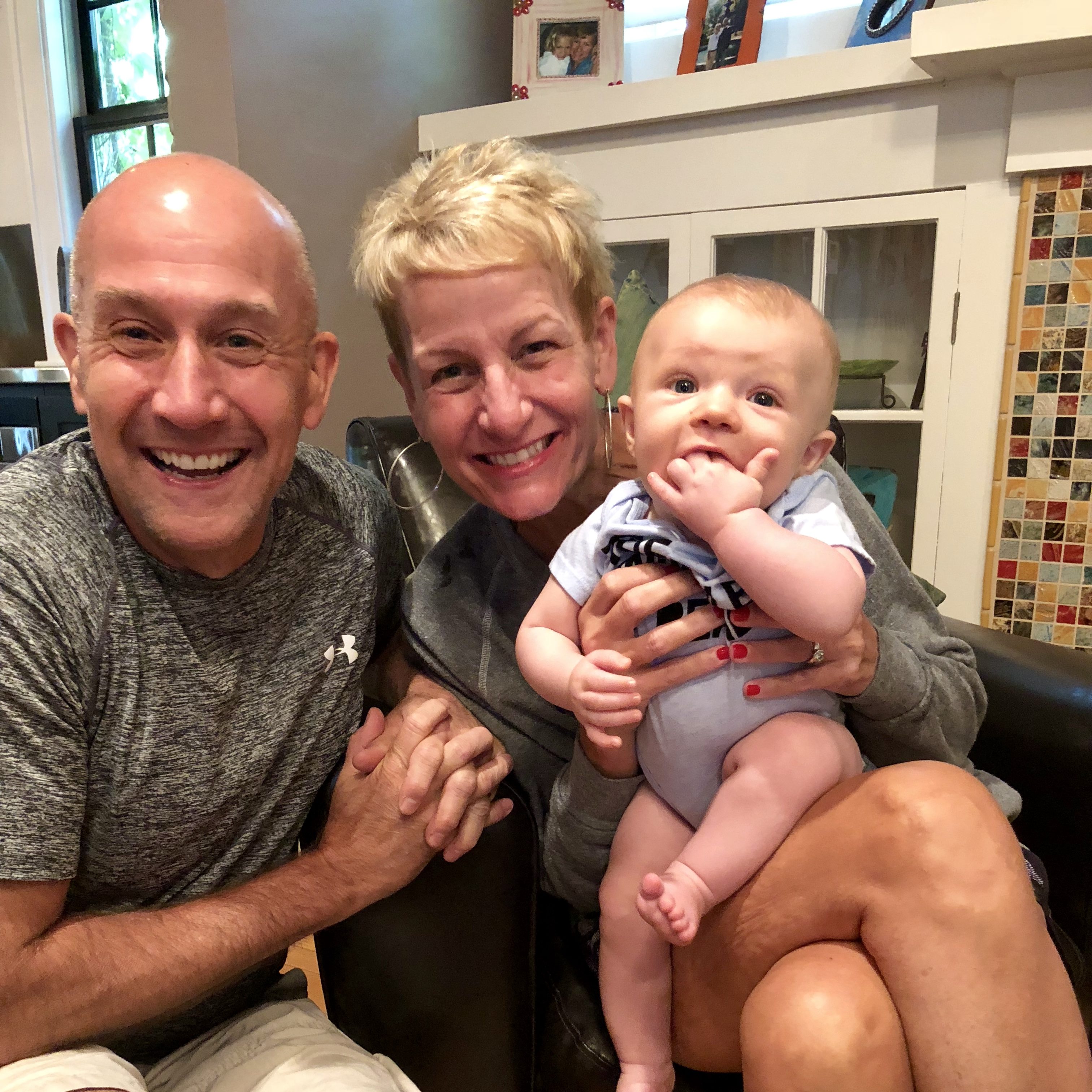
My grandparents prayed for me every day. I don’t doubt that, I know that. I sensed it. In their later years, this is how they spent much of their time. They were excited if I shared something new with them, because that meant they could continue to pray for me, together. They may have been physically weakened with age, but they were the most spiritually strong. It’s not lost on me that Christians use the phrase, “I’ll lift you up in prayer.” If Gary and Janie Nelsen said this, they fulfilled it. Tenfold. Always lifters.
My friend Catherine asks great questions. Questions can open a person up to think, to interact, to share. Catherine is amazing at always showing interest in what a person may think or feel. She asks meaningful follow-up questions and responds thoughtfully. I believe this is what Amy Edmondson had in mind when she introduced the idea of psychological safety. Trusting that a person has an interest in what you have to share is not as common as before. Catherine is a lifter because she uses her wonder to encourage others by staying curious for their answer. Every time.
These are stories of six ordinary people, out of so many amazing people in my life. Some have been leaders in their professional lives; all have been professional encouragers all their lives. They lead their lives with clarity and intention. Their focus is outward, on other people. We all need lifters in our lives. We all need to be buoyed up when the undertow of discouragement threatens to take us under.
In a season where I’ve felt exceptionally disheartened, I’ve looked to the lifters for direction. And what I’ve learned is that they all go through challenges, too. But if I can speak a kind word, if I can choose to show up, to pray, or to offer someone the space to process by asking helpful questions, I may find the encouragement I’m looking for through lifting someone else up.
Leadership is powerful because it’s the ability to influence and inspire others towards a shared goal. Leaders, by this definition, must elevate the people they lead. They have to invigorate their teams. Encouragement, then, is not optional. It’s vital.
Truett Cathy once said, “You know the best way to tell if someone needs encouragement? If they’re breathing!”
Be a lifter. You have everything it takes.
Take care & take heart,


 The Steadfast Heart